The recent history of federal government shutdowns has highlighted the need for legislation to ensure that federal employees receive pay during funding gaps. With the Government Employee Fair Treatment Act of 2019 now law, federal workers are guaranteed back pay after a shutdown ends. This article examines the background of the issue and what the new law means for federal employees.
The Problem of Missed Paychecks
When the federal government partially shuts down due to a lack of appropriated funds, many federal employees are furloughed. This means they must stop working, as no money is available to pay for their work. Those performing essential services, such as security operations or healthcare, are excepted from furloughs but still do not receive pay on time.
In the past, furloughed federal employees had no guarantee they would recoup their lost wages. Congress usually approved back pay, but it was not assured. This created hardships for many public servants, especially those living paycheck to paycheck. Missed pay put strains on family budgets and caused people to miss mortgage, rent, and loan payments.
During the 35-day partial shutdown from December 2018 to January 2019, approximately 800,000 federal employees went without two paychecks. Contractors also lost income. The financial uncertainty was demoralizing for the workforce and made it harder to recruit and retain talented personnel.
New Law Provides Back Pay Assurance
To address the pay issue, Congress passed and President Trump signed the Government Employee Fair Treatment Act in January 2019. This law mandates that furloughed and excepted federal employees receive back pay after a lapse in appropriations ends.
Some key provisions include:
-
Furloughed employees are entitled to be compensated at their standard rate of pay for the time they were furloughed. This is referred to as retroactive pay
-
Excepted employees who work during a shutdown will receive their standard pay for performing those duties. This includes any overtime, premium pay, and allowances they would have normally received.
-
Back pay must be provided “at the earliest date possible after the lapse in appropriations ends, regardless of scheduled pay dates.”
-
The law covers most executive branch employees. Elected officials cannot receive retroactive pay. Some political appointees are also excluded.
-
Congress still must appropriate funds for back pay. But the statute makes clear that federal employees should not bear the financial burden of a shutdown.
Providing Financial Certainty
By guaranteeing back pay, the Government Employee Fair Treatment Act aims to create some financial certainty for federal workers and their families during shutdowns. Employees can be furloughed knowing that they will eventually recover their full compensation.
Retroactive pay helps avoid the unfair situation of federal personnel being forced to work without pay during a funding gap. The practice of withholding pay from excepted employees was challenged in court during the 2018-2019 shutdown. A federal judge ruled that the Constitution’s Appropriations Clause barred coercing labor from employees by denying pay.
While the new law reduces the cash flow hardships of shutdowns, it does not eliminate them. Missed paychecks can still strain household budgets in the short term before back pay arrives. The lag in wage payments also hurts government contractors who are not covered by the back pay policy.
Looking Ahead
By guaranteeing compensation, Congress has helped create a more equitable process for federal employees impacted by shutdowns. However, legislative action is still needed to fund the government in a timely manner and avoid shutdowns altogether. Preventing funding gaps would avoid disruptions in government services and pay uncertainties for federal workers.
The Government Employee Fair Treatment Act was an important step in providing employee financial protections. Yet policymakers will still need to improve the broken appropriations process that allows shutdown situations to occur. That will require bipartisan efforts to compromise and fully execute the essential task of funding the government.
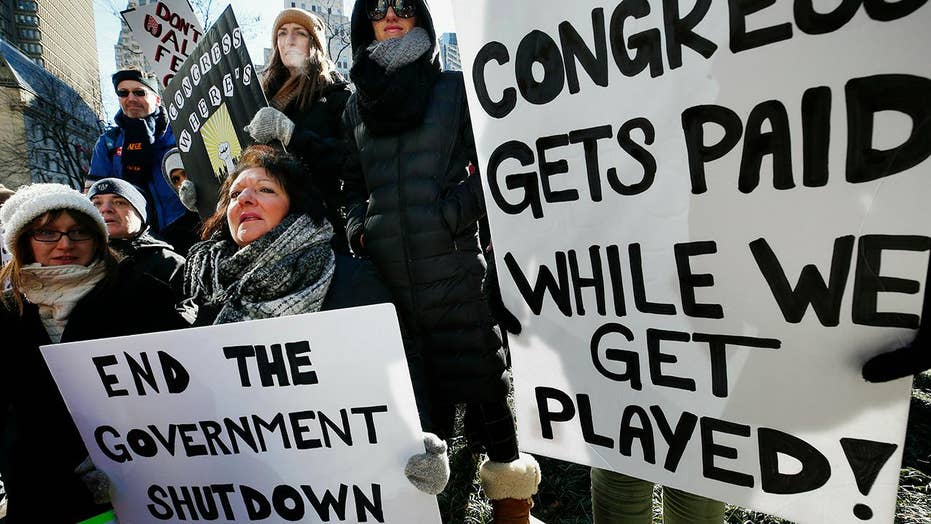
Congress approves bill to pay back federal employees once shutdown is over
FAQ
Do federal workers get paid during government shutdown?
Employees who don’t have to work are “furloughed,” which means they don’t get paid and don’t have to do their jobs, until the shutdown ends. Will employees who are “excepted” get paid? Employees who are “excepted” and continue to work during the shutdown will almost certainly be paid for this time.
Does Congress still get paid during a government shutdown?
Members of Congress get their regular paychecks even when the government is shut down, while thousands of federal workers are furloughed and don’t get paid. During the 2018-19 government shutdown, more than 800,000 federal employees were furloughed without pay, including 6,000 in Minnesota.
What happens if the federal government shuts down?
When the government shuts down, federal agencies have to decide whether an employee is “essential” or “non-essential.” Though the government is closed, “essential” workers keep working, but they won’t get paid until the government reopens.
When the government shuts down, do they get back pay?
Yes. After the lapse in appropriations is over, employees who had to do excepted work during the lapse will get paid for the time they worked. (See 31 U. S. C.
